

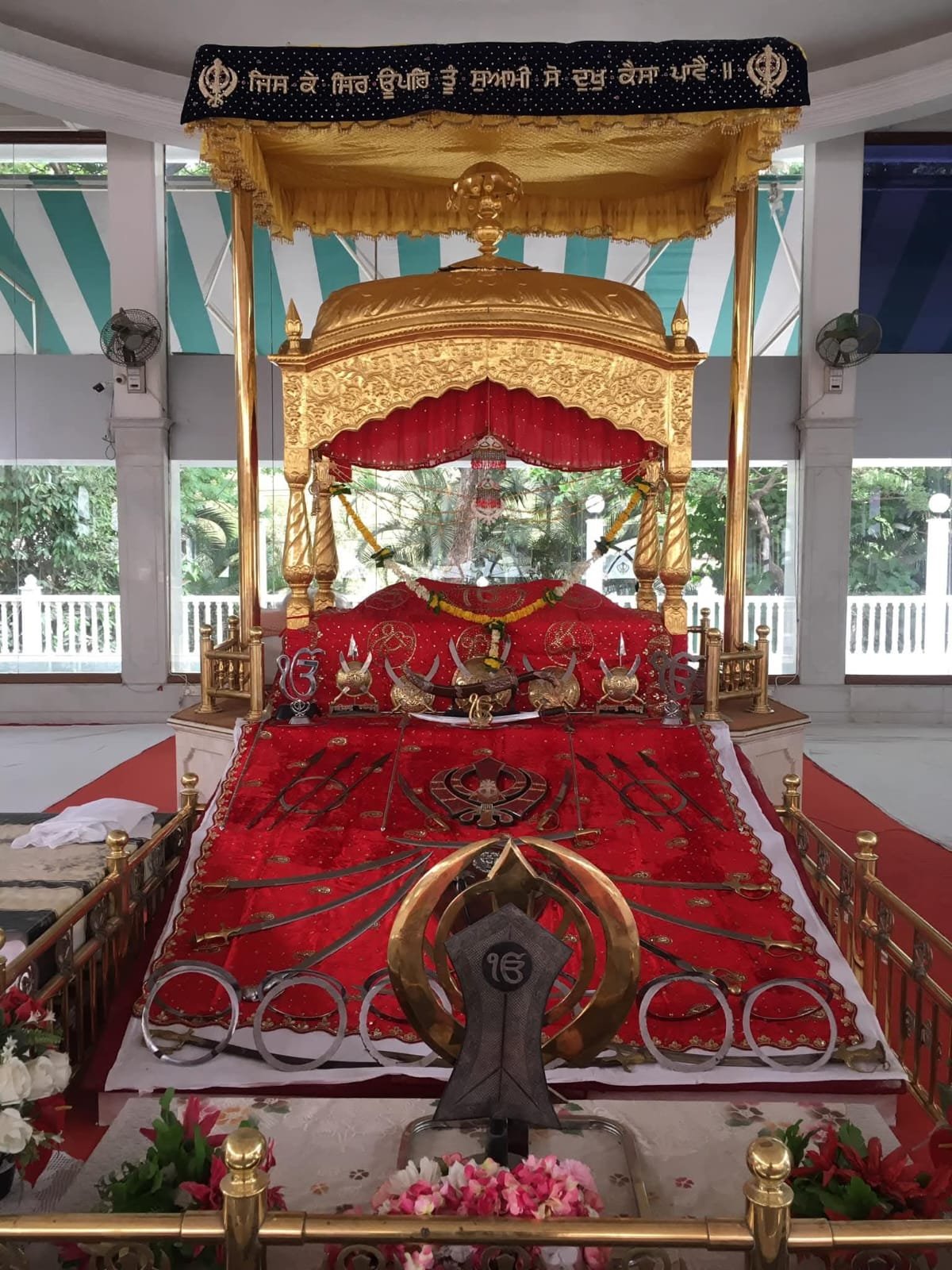
They didn’t speak much in the Holy Gurdwara.
Words felt unnecessary there, like explanations offered to someone who already knew your entire story. Yet, if one stood quietly and watched, one could almost hear the three women breathe the same unspoken prayer—“Jo tudh bhave sai bhali kar, tu sada salamat Nirankar.” Whatever pleases You, do what is good. You are everlasting, the Formless.
Their lives have moved in different directions, yet their roots are plunged into the same sacred soil. The family has always lived under the shade of a devout Hindu Sufi Saint. His presence more memory than man now. His simple message – “Love, not logic, is the true language of the divine”.
The eldest sister carries that wisdom tucked somewhere beneath data, numbers and structured deals. A class-topper, an MBA, a banker with a mind trained to measure risk, she has lived through storms that have stripped away everything calculable.
There have been nights when even her faith has trembled like paper in the rain, but each dawn she rises again, whispering to herself, “The Beloved tests those He loves most.” The Sufi Saint said surrender is the final sophistication. Perhaps, she believes, resilience is also another form of surrender.
Her younger sister lives by another melody. The call of Krishna’s flute. She wears her devotion lightly, like a shawl that warms without burdening. A teacher by profession and calling, she has poured her youth into schools and colleges built for girls who for long had never been told they could dream. Her Guru, gentle yet exacting, taught her the Gita’s promise: that no act of goodness, however small, is ever lost. And yet, behind her composed smile, she carries deep bruises invisible to the unseeing eye. Betrayal, humiliation, endless tests of patience and ridicule – each accepted, not because she is weak, but because she trusts that the divine accountant never forgets compassion.
Along came the sister-in-law. An outsider by marriage, yet seamlessly woven into this spiritual tapestry. Her laughter carries the discipline of an Air Force upbringing and the elegance of someone who has once been with an American airline, been a French Interpreter. She has touched many worlds. Aviation, classrooms, motherhood, and chosen, finally, to anchor herself in the calm waters of Santmat. She often says that renunciation is not about retreating from life, but about deepening one’s seeing within it. To her, tending to her home, children, and husband’s calling has been no less spiritual than meditation. In quiet corners of her day, she too turns inward, reciting softly the Name of her Master and the words given to her.
Three paths, three practices – Sufi, Vaishnav, Santmat – and yet, one rhythm runs beneath them all, echoing Guru Nanak’s truth: Ek Onkar. One within all. One beyond all.
At family gatherings, their faiths mingle like fragrances rather than boundaries. The eldest might quote a verse from a Sufi mystic, the second would respond with a line from the Gita, and the sister-in-law would complete it with a shabad or reference Bulley Shah.
Their children sometimes smile, bewildered yet warmed by the seamlessness of it all.
Still, there are days when each woman stands alone before her unseen trials. On such days, no philosophy or scripture can offer immediate solace. Only the heart’s surrender can. The banker sits quietly, repeating a line from Farid or Sachal. The teacher closes her eyes and sees Krishna or her Guru smiling through her tears. The homemaker settles into her meditation, feeling the familiar current rise – soft, invisible, eternal.
Once, a friend visiting the family whispered in awe, “How do all of you hold so much pain and still glow with such peace?” The younger sister smiled faintly and said, “Because we have tried to stop arguing with God. He writes stories better than we do.”
They know that faith isn’t a fortress. It is a wide open field under uncertain skies. You can only walk it barefoot, in trust.
In the Holy Wood Gurdwara, one morning, the three of them sat side by side. The air shimmered with the low hum of prayers. The granthi’s voice carried the timeless assurance that truth never dies. Each woman bowed her head, their inner voices converging silently into that one same prayer:
“Jo tudh bhave sai bhali kar.”
Let what You will, be done. You see what we cannot. You hold what we have dropped. You mend what we do not even know is broken.
They rose together, their scarves dusted with sunlight, their hearts steady and light. Outside, the world returned to its familiar noise, but inside, a deeper silence stayed.
For faith, they have all learned, is never about certainty. It is about trust. In the unseen hands that guide, in the love that disciplines, and in the quiet Ardas that needs no words.
And so they walk on. Three women, three different paths, one prayer, one final destination.
The silent Ardas continues.
