

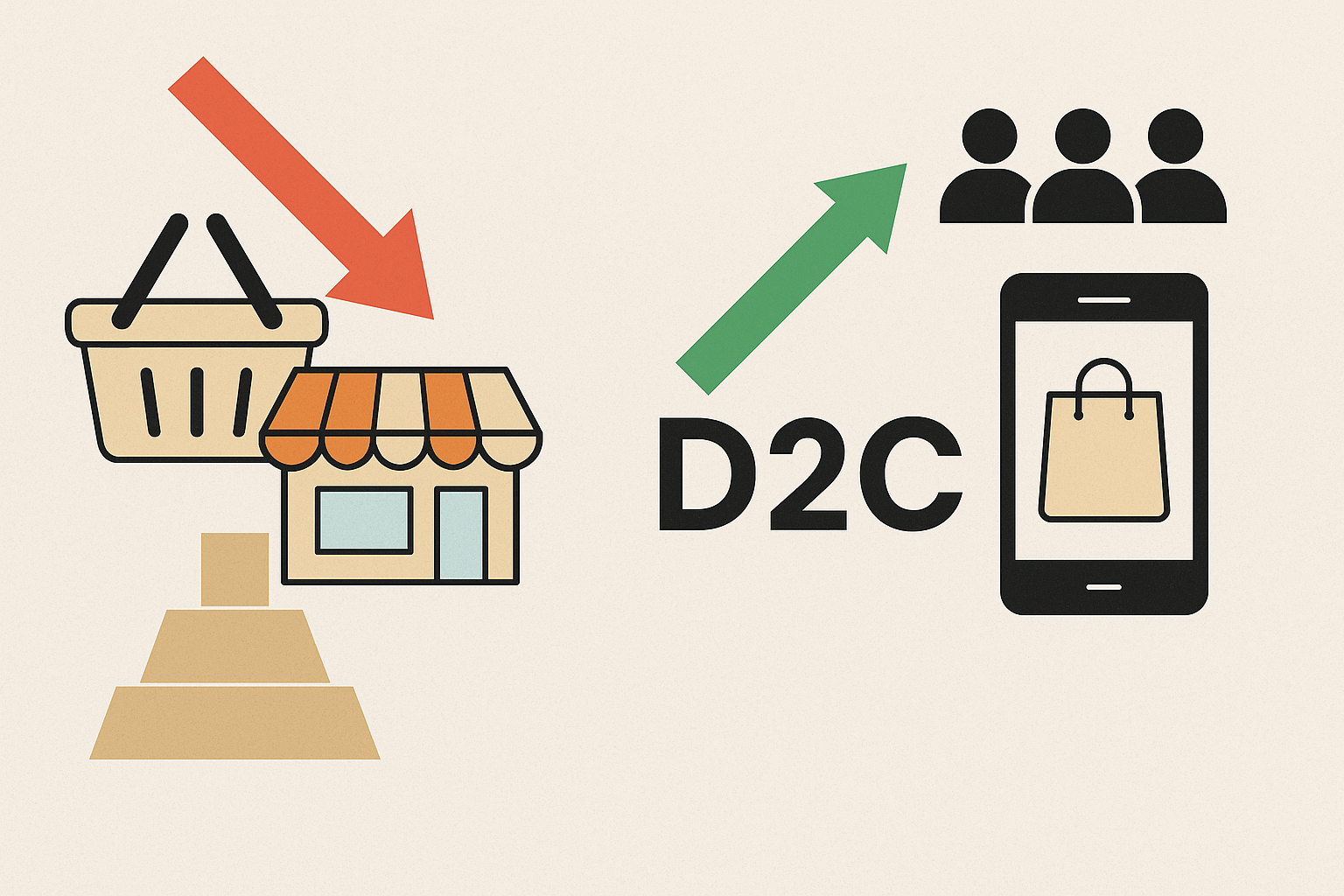
Direct-to-consumer (D2C) is no longer a side story in commerce. It has become one of the central scripts redefining how brands are born, built, and scaled in India and around the world. By cutting out traditional intermediaries and owning the consumer relationship end-to-end, D2C has transformed both the economics and the emotional architecture of brands.
How D2C Changed The Business Model
D2C turns the old retail pyramid upside down. Instead of manufacturing for wholesalers and retailers, brands now design, market, sell, and service directly to the end consumer through their own digital and increasingly omnichannel ecosystems. This shift gives companies direct control over pricing, product quality, brand story, data, and customer experience, while compressing go-to-market cycles from years to months or even weeks. In India, this model has helped thousands of digital-first brands emerge across beauty, fashion, food, electronics, and home, riding on UPI payments, logistics networks, and a young, mobile-first population.
Economically, D2C replaces margin-leakage across distributors and retailers with higher gross margins but shifts the cost center towards marketing, technology, and logistics. Strategically, it allows brands to build communities rather than just channels – through content, social engagement, and founder-led storytelling that make the brand feel more like a friend than a faceless corporation.
Core Strengths Of The D2C Model
The most celebrated strength of D2C is intimacy: brands can “listen in real time” and use data to deliver hyper-personalized journeys from product recommendations and tailored messaging to loyalty programs tuned to individual behavior. AI-powered recommendation engines, chatbots, and segmented email or WhatsApp flows now sit at the heart of high-performing D2C playbooks.
Other structural strengths include:
- Higher margins and brand control by eliminating intermediaries and owning the narrative across every touchpoint.
- Agility in product development, as real-time feedback loops enable rapid iteration and category experiments in beauty, apparel, nutraceuticals, and gourmet foods.
- Democratized entrepreneurship, lowering entry barriers for niche and regional brands that would have been shut out of traditional retail shelves.
- Global reach from day one, enabling Indian and GCC D2C pioneers to sell to diaspora and international customers without building legacy distribution networks.
Pitfalls, Blind Spots, And Bandwagon Risks
Beneath the glamour, D2C is an unforgiving numbers game, and many first-time founders underestimate its complexity. Customer acquisition costs have risen sharply as digital ad markets on Meta, Google, and now influencer ecosystems become more crowded and expensive, turning performance marketing into a “tax” that can erode margins if not balanced with strong retention. At the same time, retention is hard. A large share of first-time customers never return unless brands invest deeply in product quality, service, and thoughtful lifecycle marketing.
Operationally, the promised simplicity of “direct” hides a messy reality of supply-chain orchestration, inventory planning, returns management, last-mile delivery, and customer support at scale. Marketplace partnerships add reach but can trigger price wars, margin compression, and a race-to-the-bottom on discounts, especially when brands lack a differentiated story or product moat.
The bandwagon effect fuelled by venture capital, media hype, and D2C success stories has pulled many entrepreneurs into the space without adequate understanding of unit economics, cohort behavior, or the patience needed to build a real brand rather than just a store.
What The Future Holds
Looking ahead, D2C is moving from “digital-only brands” to “digitally orchestrated commerce,” where online, offline, and social channels blend into one integrated experience. More brands are opening flagship stores, shop-in-shop formats, and experiential pop-ups, while still using their own websites, apps, and marketplaces as performance and data engines.
Government-led initiatives like ONDC in India are likely to further democratize digital distribution by lowering platform dependency and commission burdens for smaller D2C brands.
Technologically, the next wave will be shaped by:
- AI-driven personalization, predictive engagement, and dynamic pricing at scale.
- Virtual try-ons, AR discovery, and immersive storytelling that bridge the sensory gap of online shopping.
- Deeper integration of sustainability and transparency, with consumers rewarding brands that are honest about sourcing, impact, and purpose.
Global benchmarks suggest that insurgent, digital-native brands will continue to grow faster than legacy incumbents, especially where they own manufacturing, leverage data, and build strong communities around a clear mission.
Lessons And What More Needs To Be Done
The D2C revolution carries several sharp lessons for founders, investors, and large incumbents.
First, D2C is not a shortcut. It is an advanced discipline that demands mastery across product, tech, storytelling, operations, and finance.
Second, sustainable success flows from retention, not reach. Brands that obsess over repeat customers, net promoter scores, and lifetime value will outlast those addicted only to growth charts and fundraising.
Third, governance matters: as some high-flying D2C brands approach IPOs, the market is rewarding disciplined capital allocation, clear unit economics, and responsible growth over vanity metrics.
Going forward, D2C players will need to:
- Build omnichannel capabilities thoughtfully, ensuring physical expansion enhances and not cannibalizes the direct relationship and economics.
- Invest in first-party data, privacy-conscious marketing, and community-led engagement to reduce dependence on volatile ad platforms.
- Develop resilient supply chains and ethical, sustainable practices as differentiators rather than afterthoughts.
In many ways, D2C is forcing brands back to timeless basics: know your customer deeply, keep your promises consistently, and treat every transaction as the beginning of a relationship, not the end of a funnel.
Closing Thought
Direct-to-consumer started as a channel but is fast becoming a philosophy of doing business, one that puts the customer at the center and demands that brands earn the right to be in their lives, every day. The entrepreneurs who will define the next decade will be those who respect the power of this model without being blinded by its hype, marrying technology with empathy, and growth with governance. As the old world of retail dissolves into a more fluid, data-rich, and customer-led landscape, the real pioneers are not simply selling products. They are quietly redesigning the very grammar of commerce.
As one might say in this context, “The future of retail will belong not to those who reach the most people, but to those who matter the most to the people they reach.”
