
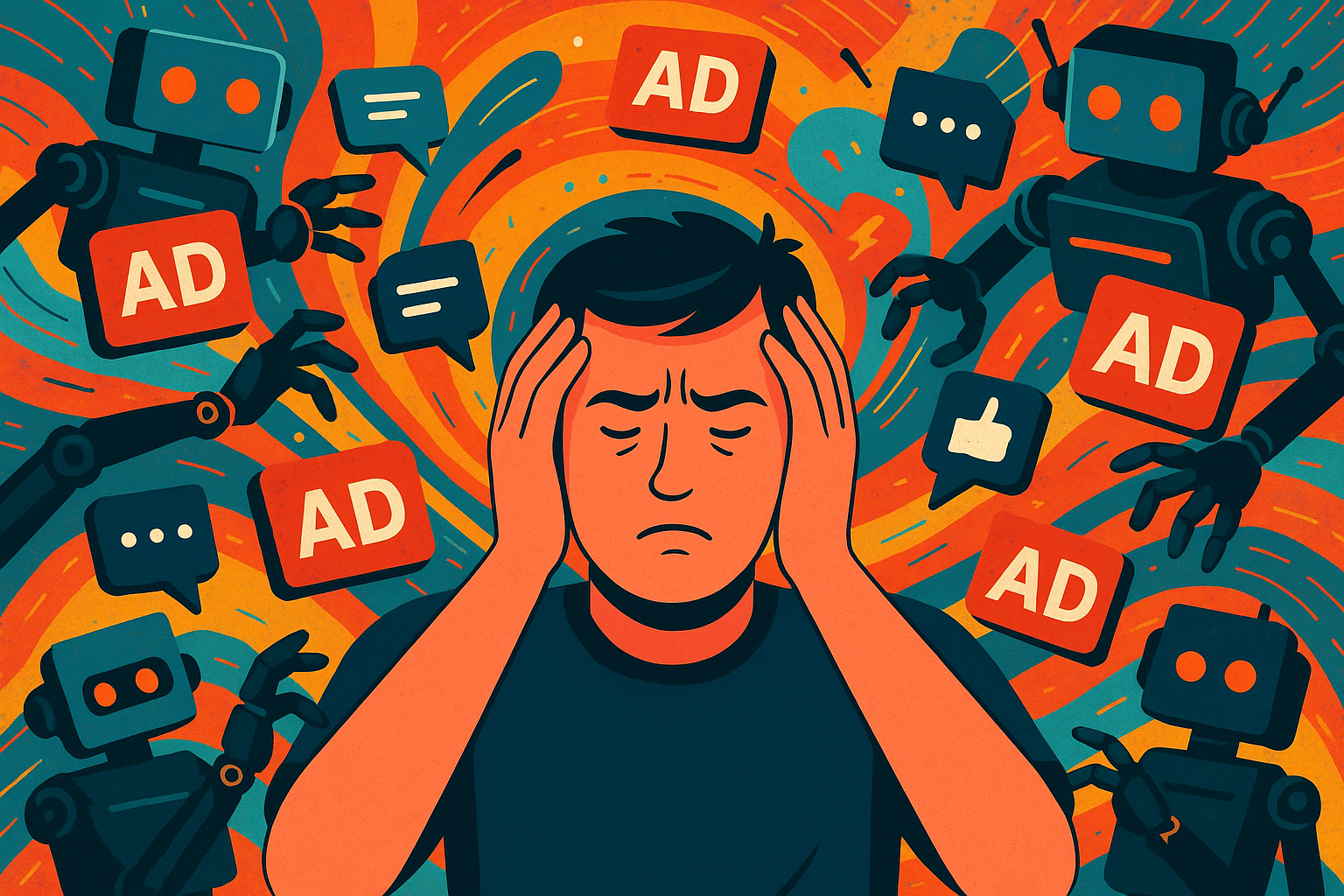
Imagine opening one’s favourite app and realising one does not recognise one’s own timeline anymore. The faces of friends have been pushed down, replaced by glossy product videos, AI-polished influencers, and viral “how to become a multi-millionaire before thirty” clips that all look the same. The strange thing is not that people are still online, but that they have stopped showing themselves there.
A large cross-country study of 250,000 people in 50 nations found that social media usage has fallen by about 10 per cent, with the sharpest drop among the very youth who once made these platforms explode. They log in less, post even less, and often choose to simply scroll in silence, like visitors wandering through a mall that no longer sells anything they actually came for.
When Friends Became Inventory
In the early years, social media was messy and charming. Blurry breakfast photos, bad selfies, and random life updates that nobody needed and everybody secretly loved. Over time, that chaos was cleaned up and ‘monetised’ – the most happening buzzword. Algorithms discovered that ads, outrage, and hyper-produced content kept people scrolling longer than ordinary human moments. ‘Doom scrolling’ as some call it. Never-ending scrolling. Slowly, the ‘social’ part of social media was demoted. The ‘media’ part, optimised for revenue, took over.
Today, many users describe their feeds as digital shopping malls, where every swipe sells a lifestyle, a product, an unbelievable service, or a carefully curated personal brand. Real posts from friends are buried and lost under layers of sponsored content, suggested creators, and viral clips. Have human relationships fallen into just another category of inventory fighting for attention?
Bots, Fake Engagement And The Dead Internet
While real people are posting less, non-human traffic is exploding. Recent cybersecurity reports indicate that more than half of global internet traffic now comes from bots, with a significant share from “bad bots” used for scraping, fraud, manipulation, or artificial engagement. These automated systems inflate views, likes, and comments, making it hard to know what is real and what is manufactured.
This fuels what many call the “dead internet” feeling: timelines filled with content that looks human but is often generated, optimised, or amplified by machines rather than people. For users, that means talking into a room where half the applause comes from invisible robots, turning authentic sharing into a strange, one-sided performance.
Why Gen Z Is Logging In, But Not Posting
Gen Z has definitely not disappeared from the internet. It has changed how it uses it. Many young users now behave like “quiet observers”. Voyeurs, as one would define them. They lurk, scroll, and consume content but avoid putting their own lives on display. Several possible reasons stand out:
- Performance fatigue: Every post feels like a mini-launch, judged on likes, aesthetics, and timing.
- Perception anxiety: One clumsy sentence or poorly timed selfie can trigger backlash, screenshots, or long memories in search results.
- Emotional mismatch: With wars, disasters, and crises constantly in the feed, sharing a holiday photo or well-plated food can feel tone-deaf or selfish.
Instead of documenting everything publicly, many young people are moving their real conversations into small private groups, closed communities, or even off-screen spaces where algorithms and strangers cannot watch.
Concern Areas And Lessons To Learn
This shift reveals some deep fault lines in the digital world. Key concerns include:
- Authenticity erosion: When bots, AI content and branded posts dominate, trust in what is “real” begins to break down.
- Mental health strain: Constant comparison, fear of public judgment, and doom-scrolling crises have turned many feeds into emotional minefields.
- Social disconnection: People feel “online” but not “together”. The original promise of staying in touch with friends is quietly fading.
The lessons are equally important. Platforms need to rediscover slowness, serendipity, and genuine human presence in their designs, not just optimise for time-on-app. Users, on their part, are learning to treat social media as a tool, not a mirror: posting more intentionally, curating what they consume, and protecting their attention as a scarce resource.
When LinkedIn Starts To Sound Like Facebook
Even the last ‘serious’ sanctuary, LinkedIn, is changing flavour. Once focused on careers, hiring, and industry insights, it is now dotted with motivational memes, deeply personal confessionals, and heated political debates that look more at home on Facebook or X.
Several observers note a surge in posts about elections, geopolitics, social activism, and ideological battles, often driven by the same engagement logic: strong emotions keep people scrolling and reacting. Surveys show many professionals feel political content is out of place on LinkedIn, yet algorithms reward whatever draws interaction, even if it fractures the professional tone the platform was built on.
A Quieter, More Human Internet
Yet this is not only a story of decline; it may be the beginning of a reset. As people post less performatively, they are also asking better questions: Who deserves my time? Who deserves my data? Does this platform make my life richer or just noisier?
The internet became powerful because ordinary people showed up as themselves. If platforms can once again make space for imperfect photos, small updates, honest disagreements, and calm conversations, the web could feel human again instead of algorithmic.
And here is the most interesting oxymoron – brands are being made to pay more to advertise online. And customers are being charged more to have an ad-free experience. How does one explain this.
A fitting thought to close with: “In a world that rewards noise, silence is not absence. It is a decision to value what is real over what is merely visible.”
