

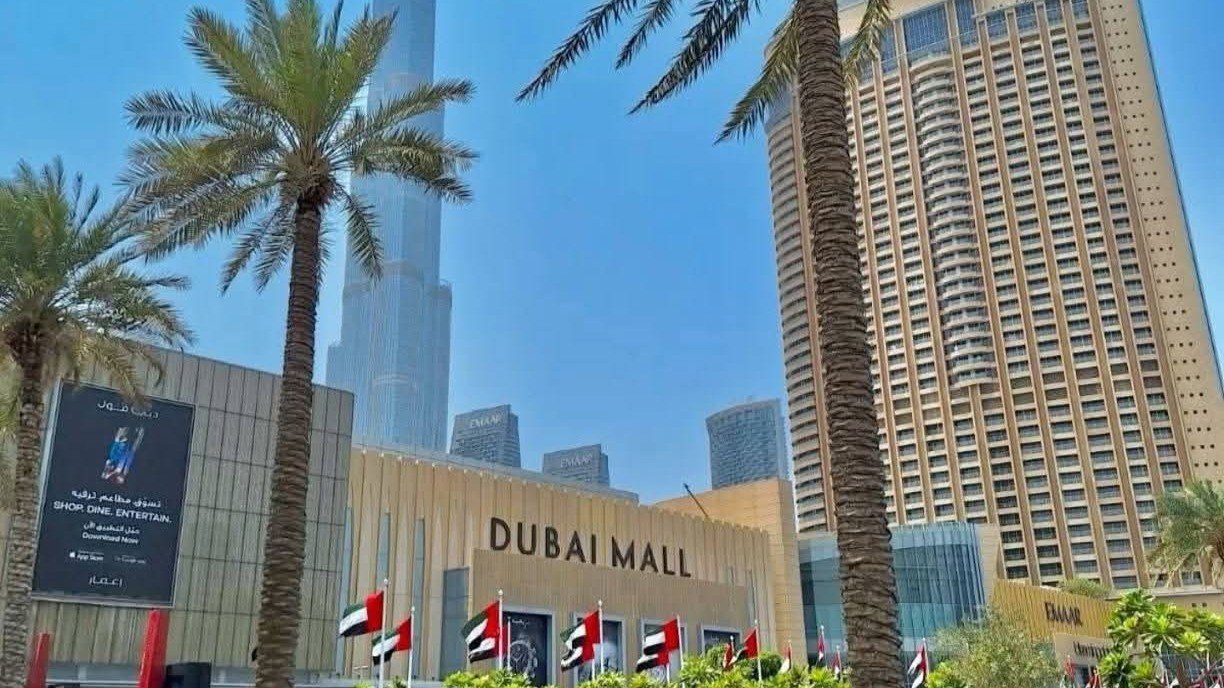
The gentleman had long stopped needing to prove anything. After over three decades in Dubai and over half his life outside India, what once began as ambition had softened into quiet yet firm understanding. Across those years, he had run three different global businesses in three distinct global cities, each a chapter of triumph, fatigue, discovery, downsides and renewal. Today, he served on an advisory board, guided a few private groups run by friends, and offered perspective to those still caught in the race.
It had been a month since the conflict began in the region. Not inside the city itself, but close enough to stir screens, statistics, and sentiment. Even though needlessly caught in the crossfire, Dubai and UAE remained calm, efficient and disciplined. The rhythm of life unmoved publicly, even when hearts quietly recalibrated beneath composed faces. The government’s actions were swift and deliberate, and every discomfort managed with remarkable foresight. From the outside, it was serenity under strain. From the inside, it was always an act of collective mindfulness.
But experience teaches perceptive eyes what to look for. Not in news tickers or policy statements, but in human behavior. He saw the flicker of doubt in conversations over coffee, particularly among the ones at the lower and middle levels, the nervous shift in tone in boardrooms when someone mentioned “supply risks” or “regional instability.” There was no panic, only a polite unease, a quiet wondering: “What if?” Even those who had built entire decades of their lives in this land, who had raised children and reputations under its skies, who owed everything to this place, now carried tiny tremors of uncertainty they could not quite name.
To him, this was not unusual. It was human. The need to feel in control has always been our deepest addiction. The inability to do so has been our deepest fear.
For himself the city had been generous, and unreasonably so. It had given structure to his ambition, dignity to his work, rhythm to his and his family’s life. He had witnessed its transformation from sand to skyline, from vision to velocity. There was peace. Security. Possibility. Even in crisis, there was order. And though his passport read a truly patriotic Indian, his heart divided its affection equally between the land that shaped his identity and the one that safeguarded his journey.
He felt a quiet duty now. Not as a strategist or advisor, but as a keeper of calm. There was little one man could do against the geopolitics of destruction. But he could choose not to multiply fear. He could keep perspective alive, like a small lantern lit in a long tunnel.
It reminded him of tales from ancient wisdom, where strength was measured not by defiance but by balance. In Arab poetry, there is the story of Hatim al-Tai, a pre-Islamic figure of generosity whose courage was not drawn from weapons but from the conviction that kindness disarms chaos better than rage does. And from the Hindu epics, he remembered Bhishma on his bed of arrows, silent yet unfaltering, embodying duty even as the world waged war around him. Both men lived in turbulent times, yet neither turned bitterness into a shield. They stood still, and their stillness itself became instruction.
He thought of that often when conversations turned heavy, when markets twitched, and speculation spread faster than reason. Stillness, he realized, was not inaction. It was an act of spiritual discipline. And perhaps that is what true leadership means. Not amplifying distress but absorbing it without distortion.
To all those he met, he began to insert these gentler lessons. That the governance of a modern enterprise is not merely financial oversight but emotional stewardship. In uncertain times, boards must think like guardians of purpose, not just protectors of profit. He spoke of transparency not as compliance language but as an antidote to fear. Empathy, not as softness, but as the structural steel of leadership culture.
He reminded them that organizations mirror the societies they inhabit. When people are anxious, rumors replace truth. When leaders stay calm, order finds its footing. Perhaps the greatest governance tool in times of crisis is restraint, the collective ability to not overreact. Because when governance forgets humanity, destruction begins not with bombs or boycotts but with breakdowns in trust.
And trust, he knew, is born from presence. The kind of quiet presence that says, without words, “We will get through this.”
He often wondered about the nature of such strength. It wasn’t born from denial, nor from extraordinary capability. It was born from alignment, from choosing, again and again, to respond instead of reacting. To stand still long enough for clarity to catch up. Was he always able to practice it? Certainly not. He had had his fair share of apprehensions and worries.
On one of his frequent morning walks, he watched the city lights. A constellation of resolve glimmering across glass and desert. The skyline stood steady, like a prayer written in steel. In the distance, somewhere beyond borders, humanity still wrestled with its own madness. But here, under measured skies, life continued. Gently, efficiently, hopefully.
He knew the hits would come, perhaps economic, perhaps emotional. Concern was natural. But he also knew that both faith and reason resided here in equal measure. The same energy that built this city from dust could rebuild peace from doubt. And sometimes, that quiet conviction, in itself, was enough to hold things together.
He recalled a fragment from an old Sufi tale. Of a dervish who once asked God why storms did not spare the innocent. The answer was not thunderous. It was whispered: “Because the innocent are the shelter.” Perhaps this was what men like him were meant to be now. Silent shelters of steadiness when the winds outside threatened to unmake certainty.
He smiled at that thought.
Modern economies could rebuild markets. Nations could draft alliances. But the rebuilding of trust required something more elemental. The grace of those who refuse to let fear become contagious.
For a world drunk on noise, that form of quiet is not weakness. It is wisdom.
As he watched another morning unfold over the still-golden city, he felt the same calm certainty he had carried for years, that belonging is not geography, but gratitude. That loyalty is not noise, but continuity.
And that perhaps the greatest service one can offer, when surrounded by division, is the energy of undeniable composure.
“In every storm, the lighthouse does not chase the waves. It simply stays lit.”
