

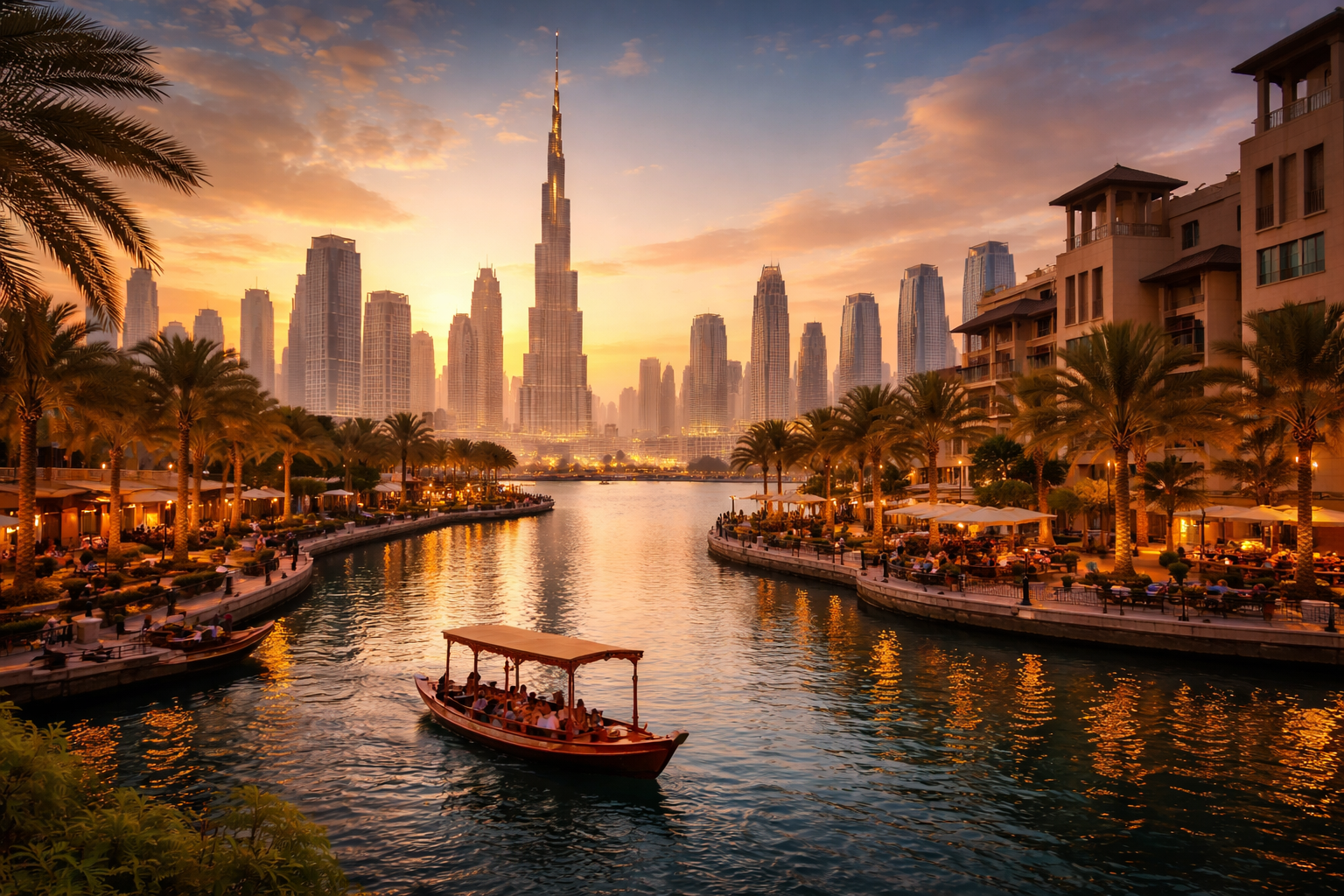
This director and board advisor often said that the city had a rhythm. Not loud, not hurried, but confident and deeply human. When he first arrived more than three decades ago, the place was a mosaic of desert settlements, wind towers, and a coastline that whispered dreams through the heat haze. The skyline was modest then, the streets intimate, and yet there was something electric in the air. An invisible current of belief that tomorrow would always be brighter than today.
In those early years, one could notice cranes rising like desert flowers after rare rains. Each project seemed audacious. Ports, highways, towers, and later, entire islands reclaimed from the sea. But behind every foundation stone was not just steel and sand. There was purpose. It was the reflection of a leadership that looked not at what was, but at what could be.
The men in flowing robes or Kanduras, the visionaries who charted the course, rarely spoke of limits. They spoke instead of possibilities. They told their people that the land could be given new meaning, that the desert, far from being a symbol of scarcity, could become a metaphor for abundance. Theirs was not a mere dream of wealth. It was a vision of community built on respect, innovation, and inclusivity.
Over the years, the city became a living classroom, teaching the world what ambition guided by wisdom could achieve. It learned to host nearly two hundred nationalities, each bringing language, cuisine, and colour. Yet all bound by a shared sense of belonging. The souks, the cafés, the offices, each echoed with greetings in many accents, not foreign anymore, but distinctly Dubai.
Some explained this harmony through leadership. Others spoke of the land’s vastu, its inherent energy of welcome and balance. Perhaps both were right. Because something intangible kept binding people here, drawing them to stay and to give back.
For him, as a professional who had led and advised boards for much of his life, the city mirrored many of the values he held dear. Discipline, foresight, and grace under pressure. But it was in his home that he found the truest reflection of what this city meant.
His wife often said she felt an indescribable sense of safety here, that rare peace of mind that lets you walk by the sea at midnight without fear, and send your children anywhere knowing they will return not only safe but wiser.
His sons, born and raised in the city’s rhythm, grew up learning not only technology and trade but tolerance and togetherness. In their schools and playgrounds, they saw every race, religion, and region represented, yet never felt divided. The city taught them that identity is not a wall. It is a bridge. That kindness, not nationality, determines friendship. And that progress is not measured in passports, but in participation.
Their collective experiences deepened this bond with the land. They remember how every interaction with government bodies was marked by efficiency, courtesy, and genuine respect. How the local police treated residents not with authority, but with empathy. Guardians more than enforcers. For the family, this was not just governance. It was culture in motion, civility institutionalized.
And every time they boarded an Emirates flight from anywhere in the world, a quiet contentment filled their hearts. It was more than patriotism, it was belonging. The warmth of the cabin crew, the familiar perfume of the air on arrival, the skyline shimmering in the distance, each signalled the same simple truth: they were home.
Over the years, he watched the city defy countless headlines. Predictions of decline appeared with ritual regularity. Eloquent essays forecasting the fall of a dream. And yet, each time, the city responded not through counterarguments but through quiet progress. It reinvented its economy, diversified its identity, and deepened its soul. It built not only towers but trust, not only infrastructure but influence.
Now, as new storms brew in the region, conflicts that test diplomacy, resilience, and faith, the city once again stands poised between challenge and change. The world may debate its neutrality, question its optimism, or misunderstand its silence. But those who know its heart understand that silence here is not passivity, it is prayer. It is the calm confidence of a people who have learned that patience often outlasts provocation.
This is what makes the city’s story extraordinary. It is not defined by its wealth, but by its will. Not only by its buildings, but by its belonging. It continues to thrive because its foundation was never merely economic, it was also emotional. It was built on the unspoken handshake between leader and resident, a bond of mutual respect. That is why hundreds of nationalities coexist here, not in tolerance, but in trust.
And so, the city continues its silent symphony. Strong yet humble, modern yet mindful. For those who call it home, every dawn still carries that same promise whispered across decades: that tomorrow will indeed be brighter, and that dreams, here, still have permission to come true.
As an old Arabic saying goes, مَنْ زَرَعَ النَّخِيلَ زَرَعَ لِلْأَجْيَالِ أَمَلًا (English pronunciation): Man zara‘a an-nakhīla zara‘a lil-ajyāl amalan. “He who plants palm trees, plants hope for generations.” The essence of this land is that very hope. Rooted deep, always yielding shade.
And echoing a line from Hindu philosophy, “Vasudhaiva Kutumbakam”. The world is one family. This city, this nation, perhaps more than any other, has turned that verse into lived reality.
And this Director, and many others like him, continue to pray and hope that good sense and sanity prevail upon humanity. Wishing all of us Eid Mubarak
