


The special bogey, hitched to a weary locomotive, carried twenty-year-old dreams across the vast, shifting geography of India. It was the winter of 1978. For a group of engineering students from Pune, the train was less a vehicle and more a mobile hostel, clattering through the dark, icy nights of Northern India. Mornings brought new cities, new platforms, and the shivering, pragmatic ritual of sometimes bathing at railway stations under the gaze of curious commuters.
Among them was a young student whose internal world was already a mosaic of traditions. His family had cultivated in him a reverence for the Bhagavad Gita, the Upanishads, the Guru Granth Sahib, the Bible and the whispered wisdom of Sufi mystics.
To his parents, who came as refugees from what is now Pakistan, these were not competing ideologies but different windows looking onto the same vast, infinite sky. They taught him of Oneness, a singular divinity.
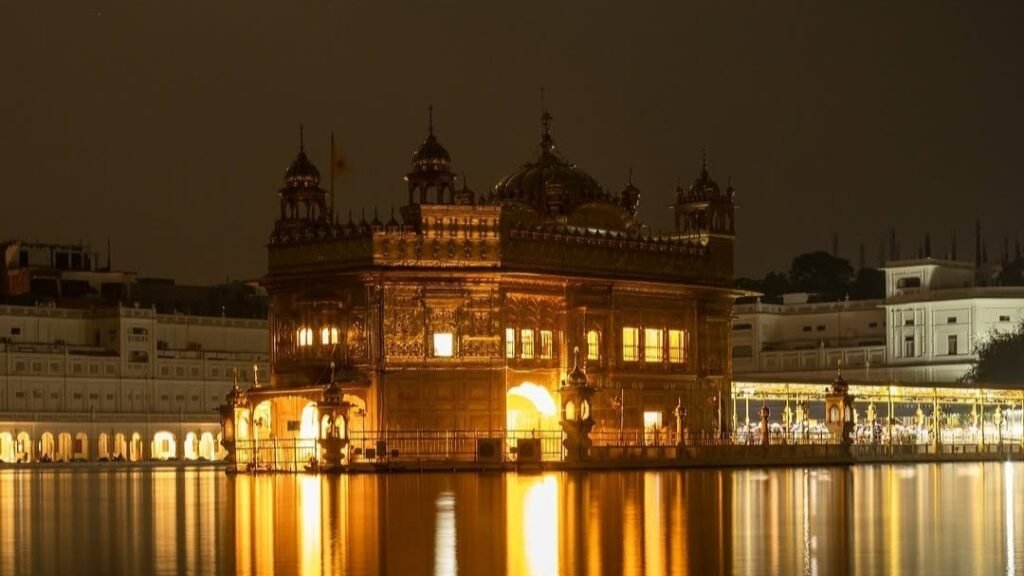
When the train finally arrived in Amritsar, the air was cold, carrying the crisp, sharp promise of a deep, northern winter. Though he was used to going regularly to various temples or Gurdwaras in Pune, walking into the Harmandir Sahib felt like walking into a different frequency of time.
The Golden Temple shimmered against the early morning mist, an island of serenity in a world that always seemed to be shouting. For a twenty-year-old accustomed to the weather of Pune, the ethereal silence, the cold marble beneath his feet, and the humble warmth of the Karah Parshad offered a revelation. It was the first time he understood that worship was not just an intellectual exercise. It was a physical state of being.
That trip became the genesis of a lifelong rhythm. No matter where life took him, whether to the glass-walled offices of a metropolis or the five dozen international cities, he made a pact with himself. Once a week or ten days, he would visit a place of worship. That became his personal “Amritvela”, a time to wake up before the world’s noise began to deafen his own intuition.
Over the decades, he observed that the rituals were remarkably similar. Whether it was the Sewa, the selfless service of washing dishes or sweeping floors, or cleaning shoes, or the shared equality of the Langar, the message was consistent. He recalled the stories of old, where, between the boundaries of established orthodoxy, there was an attempt to find the divine in the common man. These were blueprints for humanity his family had ingrained into him.
As he climbed the corporate ladder, however, he found himself standing at a strange intersection. The world of modern business, with its cut-throat metrics and relentless pursuit of material growth, seemed to demand a version of himself that needed to be hardened, transactional, and insulated from this spirit of openness. The world seemed to suggest that to be inclusive was to be weak, and to serve was to be subservient.
Yet, somewhere internally, he was unwilling to accept the binary choice between “good human” and “effective leader.” He began to view his role in personal as well as corporate governance through the lens of stewardship.
In the tradition of Sewa, one does not own the kitchen. One merely ensures that the fire stays lit and the food is nourishing for the traveler. He tried to apply this to his teams. He realized that a leader is not a master of subordinates, but a steward of potential.
If a business is a Langar, a place where people come not just to extract, but to be nourished, it becomes sustainable. The conflict between “inclusive living” and “corporate success” is, he realized, an illusion created by a scarcity mindset. When one operates from a place of Oneness, the goal is not to kill the competitor, but to expand the field of value.
He watched some of the quiet, dedicated people in his family, friends and work circle. They existed with a certain kind of honest, ethical discipline for decades, never seeking applause, and saw the ultimate form of governance. It was self-governance. The ability to show up, do the work, and find beauty in the mundane.
He watched and internalised that the most effective leaders were those who retained the ability to be mesmerized. When he sat in his boardroom, he tried hard to practice the same stillness he had felt in 1978. He learned to listen to the “silence between the words,” to recognize that every employee, every shareholder, and every customer was a distinct manifestation of the same humanity.
He chased material goals, most certainly yes. He built companies, managed budgets and navigated the rough seas of global markets, got impatient and lost his cool on several occasions, got carried away at times with success. But he always worked hard to bring himself back to the detachment of someone who knew the difference between the vehicle and the destination. He understood that one could be ruthlessly disciplined in the execution of a strategy, or in giving an unpleasant decision, while being incredibly tender in the treatment of a colleague.
In the end, he realized that his journey was a quiet synthesis. The engineering student who once shivered on a train platform had become a person who tried hard to carry the warmth of the concept of a Community Kitchen into the cold corridors of commerce. He proved, to himself and to those who watched his career, that the most durable legacy is not only the quarterly profit margin and the incessant growth, but also the culture of dignity one leaves behind.
One can chase all the possible heights of corporate ambition and still maintain dignity and grace. The noise of the world is only as loud as one allows it to be. If one finds the inner “Amritvela”, that quiet, sacred hour before the ego takes the wheel, everything else finds its proper place. The boardroom becomes a sanctuary, the work becomes a service, and the journey, no matter how long, is always a return to that initial, golden light.
Easy to follow every single day? Certainly not.
Yet, the effort to attempt the correct practice must be exemplary 😊